Commercial Food Truck Insurance for New Owners
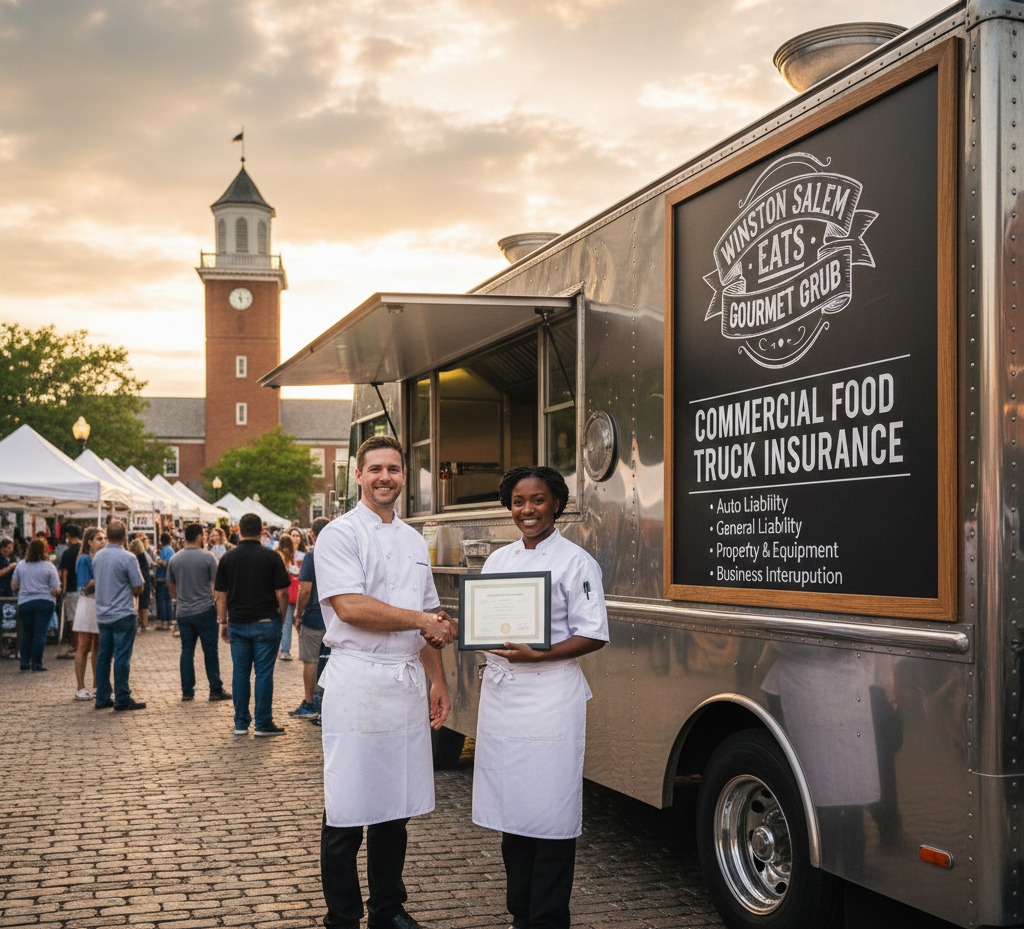
The process of starting a business based on the idea of a food truck is really thrilling, particularly when it comes to a dynamic and thriving city such as Winston-Salem, North Carolina. The city has a rich history, universities, festivals, and a local culture of food, which makes it an ideal place to start a new food truck. But the most important thing to do before attending to your first customer is to secure your business both legally and financially with Commercial Food Truck Insurance.
Menus, permits, branding, and locations are some of the aspects that new owners of food trucks concentrate on, yet fail to consider one important aspect, and that is to spare the rod on proper insurance cover. Food trucks have their own set of risks as compared to traditional restaurants, and it is always better to recognize them early before you get into the pit of huge financial losses in the future.
The guide is aimed at new food truck owners based in Winston-Salem and Forsyth County, so that you can know about Commercial Food Truck insurance requirements, local regulations, and how to select the most appropriate coverage without violating the rules of the North Carolina legislation.
What type of insurance does a food truck need?
A food truck requires a number of different types of insurance in order to be safe and legal to operate.
The most important ones are commercial auto insurance to deal with the accidents on the highway, general liability insurance to protect the injuries or damage to the properties of customers, property and equipment covering the kitchen appliances and stock, and workers’ compensation, which is possible to be taken in case the truck has employees.
Premier coverage is optional, but beneficial coverage, such as business interruption,n is taken to cover lost revenue due to unforeseen events. Collectively, these policies will make sure that the food truck is well covered against the general risks.
Why Food Truck Insurance Matters for New Owners
Food trucks exist at the crossroads of automotive risk and food service liability. This is unlike the brick-and-mortar restaurants, since your business is mobile, which is subject to traffic accidents, weather, and location hazards.
In the absence of insurance, a single accident, e.g. a customer injury, a kitchen fire, or a car accident, will close your business forever. Insurance not only safeguards your truck, but also your income, reputation and future development.
For first-time owners, insurance also builds credibility with:
- Event organizers
- City permit offices
- Private property owners
- Catering clients
Many venues require proof of coverage before allowing food trucks to operate.
Understanding Commercial Food Truck Insurance
The Commercial Food Truck Insurance is a specific category of business insurance created to provide coverage to the vehicle and food service business activities under a single policy. It integrates several varieties of coverage that are mobile food vendor-specific.
Instead of buying separate policies to cover your vehicle and business, this kind of insurance will include coverage of:
- Road accidents
- Food-related illnesses
- Equipment damage
- Property damage claims
- Legal liability
To new owners, it is simpler to have one organized policy that will make compliance easier and minimize risks.
Common Risks Faced by Food Trucks
Vehicle Accidents
Working in high-traffic places such as Downtown Winston-Salem, close to Wake Forest University, or at a festival makes the risk of accidents higher. Even a small accident will lead to expensive repairs and missed working days.
Customer Injuries
Liability claims can be due to slips around the service window, burns with hot food or allergic reactions.
Fire Hazards
Equipment used in cooking, propane tanks, and electrical systems augur the probability of fire, particularly in older trucks or modified trucks.
Foodborne Illness
Inadequate storage, cross-contamination or malfunction of equipment may result in health department violations or lawsuits.
Theft and Vandalism
Food trucks parked or kept in open lots will risk being stolen in terms of equipment, inventory, or cash.
Insurance Coverage Types You Should Know
Commercial Auto Coverage
This is mandatory in North Carolina, and it includes injuries to your body and damages to your property as a result of accidents to your food truck.
General Liability Coverage
Covers against third-party liability like injury to customers, food poisoning or damaged property at the vending sites.
Property and Equipment Coverage
Protects kitchen equipment, generators, refrigerators and fire-damaged, stolen or accident-damaged inventory.
Workers’ Compensation
In case you employ workers in North Carolina, the laws mandate that the workers be provided with workers’ compensation in case of job-related injuries.
Business Interruption Coverage
Helps are used to cover lost income in case your truck is not able to be used because of some covered events such as fire or major repairs.
North Carolina and Winston-Salem Insurance Requirements
Though insurance may not be applicable across all cities, food truck permits and event participation in Winston-Salem require evidence of coverage of liability, as a general rule.
Common requirements include:
- Minimum liability limits set by event organizers
- Valid commercial auto insurance in Winston-Salem
- Coverage naming the city or venue as additionally insured
Always check with:
- City of Winston-Salem permitting office
- Forsyth County Health Department
- Event coordinators and private property owners
How Location Impacts Insurance Costs
Insurance premiums are influenced by local factors, including:
- Traffic density
- Crime rates
- Weather conditions
- Frequency of public events
Running regularly at festivals, college campuses and busy streets can raise premiums a little while increasing the potential revenues. Insurance companies look at the frequency and location within the city of operation.
Tips for Lowering Your Insurance Premiums
Using the following strategies, new owners will be able to control the costs:
Choose the Right Truck
Safety-equipped new trucks tend to have lower rates.
Maintain Equipment Regularly
Regular checks minimize the number of breakdowns and fire hazards.
Limit Coverage Gaps
It can be cheaper to purchase a bundled policy as compared to purchasing individual coverages.
Hire Experienced Drivers
The driving history is important in the determination of premiums by insurers.
Secure Parking
Your truck can be stored in a secured or supervised place to minimize the possibility of theft.
Mistakes New Food Truck Owners Should Avoid
- Underinsuring to save money
- Ignoring local permit insurance requirements
- Forgetting to update coverage when adding employees
- Not reporting equipment upgrades.
- Assuming personal auto insurance is sufficient
These mistakes often lead to denied claims or compliance issues.
Choosing the Right Insurance Provider in North Carolina
When selecting an insurance provider, look for:
- Experience with food trucks
- Knowledge of North Carolina regulations
- Flexible policy options
- Fast claims support
- Clear policy explanations
Local agents are more at ease than default online sites in offering the right coverage recommendations based on the prevailing business situation.
How Insurance Supports Long-Term Business Growth
Proper coverage doesn’t just protect against losses—it supports growth by:
- Allowing participation in larger events
- Securing catering contracts
- Building trust with partners and customers
- Enabling financing and leasing options
Scalable insurance coverage would be required as your food truck grows to several places or you get another truck.
Final Thoughts
The opportunity of opening a food truck in Winston-Salem is a rewarding venture; however, it cannot be achieved without preparing, unlike passion. Insurance has a background role in insuring your investment, whether it is navigating the local requirements or navigating real-life risks.
New owners will be able to serve customers, expand their brand, and become a reliable member of the food industry without concern about unpleasant surprises by having Commercial Auto Food Truck Insurance in place sooner.
 A&K Insurance